Table of Contents
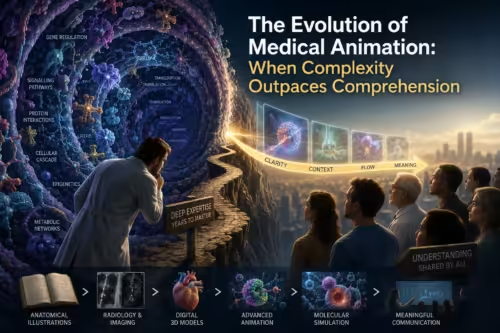
Medical animation has come a long way from the beautifully illustrated anatomy books of the Renaissance. What began as painstaking hand-drawn representations of muscles, bones and organs has evolved into highly sophisticated three-dimensional visualisations capable of taking us inside individual cells, revealing molecular interactions and demonstrating biological processes in extraordinary detail.
In many respects, medical animation has evolved alongside scientific discovery. Yet an interesting question remains…
Has our ability to understand these increasingly complex subjects kept pace as well?
Centuries ago, the challenge was largely one of observation. Early anatomists worked to document structures that had rarely been seen in such detail. Their illustrations helped physicians and students understand the physical form of the human body. As technology advanced through photography, radiology, CT and MRI scanning, and eventually computer-generated animation, our ability to visualise medicine expanded dramatically.
Behind every modern medical animation lies an extraordinary blend of science and technology. Three-dimensional modelling, digital sculpting, advanced rendering, simulation software and real-world medical imaging all combine to produce visualisations that are both scientifically accurate and visually engaging. What once required an illustrator’s pen can now be recreated with astonishing realism, allowing viewers to explore biological systems from the scale of entire organs down to individual molecules.
Today’s medical animations are remarkable achievements.They can illustrate immune responses, demonstrate how a pharmaceutical compound binds to a receptor, or follow microscopic cellular processes that would once have been impossible to imagine, let alone observe. Ironically, however, making something visible does not automatically make it understandable.
Modern biomedical research has become increasingly specialised. Scientists dedicate entire careers to understanding a single signalling pathway, receptor family or disease mechanism. Within these fields, terminology becomes second nature. What appears perfectly clear to a researcher immersed in the subject may seem bewildering to everyone else.
This is not a failure of expertise. It is simply a consequence of expertise itself…..
As knowledge expands, specialists naturally develop their own language, assumptions and mental shortcuts. The deeper someone travels down a particular rabbit hole, the easier it becomes to forget how unfamiliar that world appears to those standing outside it. The challenge is no longer discovering new knowledge, it is translating that knowledge for clinicians, students, patients and colleagues from other disciplines.
Medical animation has become one of the most effective tools for bridging that gap. By transforming abstract biological concepts into moving visual narratives, complex mechanisms become easier to follow than pages of technical text alone. Instead of describing a cascade of molecular events, an animation can allow the viewer to watch those events unfold step by step.
Yet even the most sophisticated visuals cannot carry the entire burden of communication. Every medical animation still relies on careful explanation, thoughtful pacing and language that guides the viewer through unfamiliar territory. Understanding often depends not only on what is shown, but on how it is explained.
Perhaps this is the next stage in the evolution of medical communication. As medicine continues to explore ever more intricate biological systems, the challenge is no longer simply creating more detailed images. It is ensuring that increasing complexity remains accessible without sacrificing scientific accuracy.
Medical animation has never been more capable of revealing the invisible. The task now is to ensure that what we can finally see is something we can also understand.
From my own perspective as a medical narrator…
My preoccupation is rarely the science itself. I assume the experts have already done that work. Instead, my concern is with the point where specialist knowledge meets its audience. How do you explain something that has taken a researcher years to understand in just a few minutes without losing either clarity or accuracy?
My own contribution sits at a much smaller point in that process. I don’t discover the science or create the animation. My interest lies in the space between expertise and understanding—the point at which highly specialised knowledge first becomes accessible to someone encountering it for the first time.
The answer is not to simplify the science, but to simplify the path into the science. The facts remain the same; what changes is the way they are introduced, paced and connected. Good medical communication doesn’t ask the audience to become experts. It gives them just enough understanding to follow the story being told.
Information for Nerds – The Curse of Knowledge
Psychologists have a name for the communication problem discussed above – the Curse of Knowledge.
Once we understand a subject deeply, it becomes surprisingly difficult to imagine what it was like not to understand it. Experts naturally skip intermediate steps, assume background knowledge and use terminology that feels obvious within their own field.
‘How information can disrupt learning‘
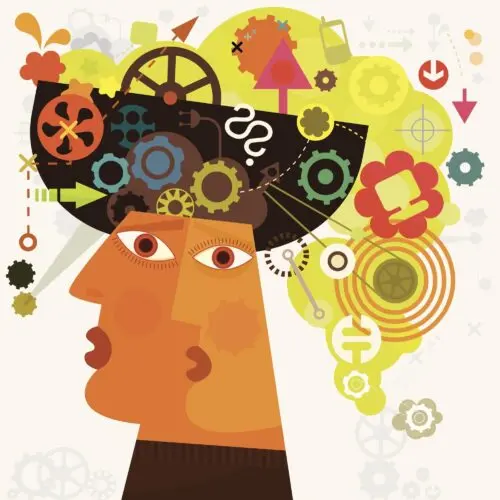
The phenomenon has been studied across disciplines including medicine, education and engineering. It explains why even brilliant researchers can sometimes struggle to communicate with non-specialists—not because they lack communication skills, but because expertise changes how knowledge is organised and retrieved.
Medical animation, scientific illustration and specialist narration can all be viewed as tools for overcoming this cognitive bias.